Showing posts with label Shreibman. Show all posts

Wednesday, 13 March 2013

May their souls rest in peace

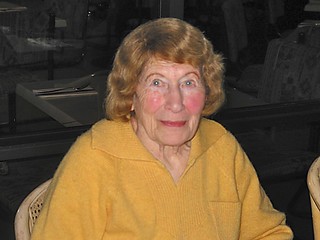
This is Aharon Shreibman, whose grandfather Hirsh was a brother of my great-grandfather Nevakh. So we're sort of cousins. Or at least, we would have been, if the Holocaust had not intervened.

For years our family has wondered whether any of our relatives had got caught up in the Holocaust. My four grandparents had all emigrated to the UK in the early part of the 20th Century, and we didn't know of anyone who was still living in Eastern Europe through the 1920s and 30s. Whether there was anyone still there, or whether we had just lost touch, we didn't know.

A few years ago, on the JewishGen website, I came across a database of people who had been killed in the Holocaust. This list had been compiled by the Soviet authorities immediately after they recaptured towns from the Germans in 1944, using testimony from neighbours, eyewitnesses and survivors (the 'Extraordinary Commission'). There were around 20 Shreibmans on the list for Pinsk, my grandfather Movsha's town, but from the scant details furnished it was impossible to identify any of them as 'ours'.

I then found another listing, this time of inhabitants of the Pinsk Ghetto in 1941/2, which shows 14 Shraibmans. Again, I couldn't identify any of them as ours - except for my grandfather's elder brother David, who is listed as a shoemaker, aged 71. There are a few recognisable family groups, but David seems to be the only Shreibman in the house he is living in. He does not appear in the Soviet Extraordinary Commission list, however, so we do not know when or how he died. And we do not know anything of his own family, or those of his brothers and sisters, so we cannot we tell whether any of the other Shreibmans in these lists are related to him in any way.

I have just now searched the Yad Vashem listings of Holocaust victims, still looking for Shreibmans from Pinsk, and have been able to compile a list of over a dozen, whose names had been submitted to the Holocaust Memorial Centre by relatives or survivors. These submissions often include personal and family details, and sometimes this information can enable you to establish a connection.

And indeed, two of the people in this list do appear to be people who are on our family tree - Aharon Shreibman, whose photo above was posted on the Yad Vashem database, and Meer, younger brother of my grandfather Movsha Shreibman. And once you work through the documents, you realise that their families are there in the list too, and that some of them may be on the other lists as well.

To see why I feel that these families are indeed 'our' Shreibmans, let's take a closer look at the Yad Vashem submissions.

There are two submissions for Aharon - one entered in 1999 by an unspecified relative named Varda, and a much earlier one from 1957, by a niece, Rakhel, who also submitted one for his wife Sara. I compiled a database of all the information I could glean from these and all the other Pinsk Shreibman submissions, to see what connections I could deduce, if any.

Looking at the first two lines of these extracts, you can see that the two submissions on Aharon differ in several respects:


They differ on his date of birth - by 10 years - and also on the name of his wife. However it was the names given for his parents that clinched it for me - they correspond with those found by the research we commissioned a couple of years ago in the Belarus Archives, which turned up a birth record for Aharon dating from 1897 (in between the two dates submitted by Varda and Rakhel). This showed his parents as Leizer and Chasya-Braina. Varda gives his mother as Khasia Breina, and Rakhel gives his father as Eliezer and his mother as Khasia. I'm as certain as can be that these two submissions are for the same person, and that that person is my second cousin once removed. My cousin Aharon. Killed in Pinsk in 1942.

Similarly with Meir. There are two submissions, one by Friedel's sister Henia in 1956, and another by her brother Shmuel in 1957. There are differences, but none significant - apart from the name of Friedel's mother, who was probably (but not necessarily) their own mother too! 'Our' Meir was born in 1896, according to the Belarus research, which is close enough to the dates in these submissions. But is this Meir really 'ours'?


In this case the detective work had to be a bit more subtle. Whilst Henia and Shmuel both submitted names for Friedel's parents, neither of them had anything for Meir's. Our Meir's father - my great-grandfather - was called Nevakh (Noah), and his mother Shprintza.

Now take closer look at the names Meir and Friedel gave their children. The first son is clearly named after Friedel's father, Avraham David, suggesting the family were following the established Ashkenazi custom of naming children after a recently-deceased close relative. When their second son is born a few years later, they call him Noakh. We do not know when our Nevakh died, but we do know from the Belarus research that his son David was the householder of the family house in Pinsk in 1912, which suggests that Nevakh had died earlier. So the first son was named for the maternal grandfather, and it very much looks as though the second son was named for the paternal grandfather.

So this is our Meir Shreibman, my great-uncle. And our Friedel, and our Avraham David, and our Noakh, my first cousins once removed.

Meir is given as killed in Pinsk in 1941; he may have died soon after the German invasion. Friedel, Avraham David and Noakh are in the Ghetto List:


They were killed in 1942, according to the submissions by Friedel's brother and sister, along with all the remaining inhabitants of the Ghetto. Aharon and his wife Sara are not on the Ghetto list, but the submissions say they also died in 1942.

May their souls rest in peace.

Friday, 8 March 2013

A new Shreibman


I've found a new Shreibman! Well, he's new to us, but he's quite old really - he's the earliest Shreibman we know of. Meet Movsha Shreibman, born - we suppose - sometime around 1740.

Yesterday I came across the 1816 Russian Census ('Revision List') for the town of Pinsk on the JewishGen website - I don't know why I hadn't spotted it before - and there they were - father and son, Girsh and Movsha (here, Movsha Dovid). We already had their names, and a date of birth for Movsha Dovid, from later Censuses. This, however, takes us one step further back into the past, thanks to the Russian - and Jewish - custom of patronymic naming, as in 'Movsha Dovid, son of Girsh'. Thus the Census gives us not only the names of the people it is recording, but as part of the identification it also gives us the names of their fathers. As we can see, Girsh's father is also a Movsha.

Girsh's age is given as 50, which suggests a date of birth of 1766. This in turn allows us to guess that his own father Movsha may have been born around, say, 1740.

It is interesting to see that the surname Shreibman was already being used by the family in 1816; we can't tell from this census record whether it dates back to the previous generation as well. Most Jews in Eastern Europe used patronymics until around the beginning of the 19th century, when the Russian authorities began requiring them to use surnames.

The name 'Shreibman' means 'writer', or 'scribe', and we can assume that the first use of the name would be a reference to that person's occupation. Was Girsh the first 'Shreibman' in our family? Or his father Movsha, perhaps? Or were they from a line of scribes maybe, who were already being referred to as such before the formal adoption of surnames?

Notice also the given names, repeated across the generations, usually at one remove:
Movsha (b abt 1740) - Hirsh (1766) - Movsha Dovid (1798) - Hirsh (1827).

There was  - maybe there still is - a tradition amongst Ashkenazi Jews of naming children after deceased relatives, especially recently deceased close relatives such as grandparents, and although we don't know the dates of death of these Shreibmans, we can see the pattern in their names.  

Another of Movsha Dovid's sons was Nevakh, or Noah. Nevakh used 'Dovid' and 'Movsha' for two of his own sons. And then this latest Movsha - my grandfather - named his first son - my father - David. And although my parents were not observant Jews, they continued with the tradition: my Hebrew given name, so they told me, is 'Moishe'.

You can see this pattern of naming in the revised version of the family tree.

So, Movsha Shreibman the First, born around 1740 - welcome to the family!


Sunday, 26 August 2012

Stella's schools

Towards the end of her life my Auntie Stella had a number of chats with her daughter Cynthia, recounting what she remembered of Shreibman family life in the East End of London in the early part of the 20th Century. Cynthia recorded the conversations, and later used them to write up an account of Stella's story.

It was 1999, and Stella, the oldest in a family of eight children, was nearly 90. She had been living in New Zealand for 50 years, and I don't think she ever returned to the UK. I don't think she ever saw her mother Sarah or any of her brothers and sisters again, bar the youngest, Alice, who emigrated to Australia in the 1960s. Nevertheless, her memory for people and places seems remarkably vivid.

I was particularly intrigued by the schools she said she had attended (see the end of p2, and then p3-4, of her Story), so when I was at the Tower Hamlets local history archives the other day I tried to track them down. She was born in 1909, so will have been at school during the period 1914-1923 or thereabouts. It is unlikely that the schools will still exist in the same form as then; the buildings may no longer even be there. But contemporary maps should show where schools were located, and the Library also has a very handy guide to London schools which can help us work out if particular schools were in use in the period we're looking at.

Stella's parents, Morris and Sarah Shreibman, had both come to England a few years previously, and spoke very little English. The language of the home, Stella's mother-tongue, was Yiddish, and she herself spoke no English until she started school.

Her first school was in Hare Street, the street they lived in for the first few years of her life. She says, "It was a Church School, and had a tiny Church building with a hall in it." There was indeed a church just up the road from their home, St Mathias. It had a little school for Infants which had opened in 1848 - one of a wave of church schools set up in the East End in the middle of the 19th Century.

(Click for larger version)
St Matthias Infant School is on Hare Street, just to the right of the church, in the centre of the map. The Shreibmans had two upstairs rooms at number 12, towards the Brick Lane end of the street, and later moved to slightly larger accommodation in Sclater Street, just off the map across Brick Lane. Wood Close School is to the right of the map, above Hare Street. Possibly before Stella left Wood Close, the family moved to Grimsby Street (here called St John Street), opposite the railway viaduct, just round the corner from Hare Street.

However, she was only at the church school for a short while, and says she then moved to an all-Jewish school near Petticoat Lane (Middlesex Street). We know that Stella's grandmother Michla - Sarah's mother - was very religious; she lived nearby, and was a frequent visitor. Her grandmother's influence may have been a factor in Stella's move from a church school to a Jewish one.

There are two candidates for this Jewish school, and we are not sure which one Stella went to. The Jews' Free School in Bell Lane was one of the biggest schools in Europe, and it had two associated Infants' schools not far from where they lived, one on Commercial Street (pictured), and the other a bit further away in Buckle Street (see map below for locations).

She probably stayed here until the end of infant schooling, at age 8. 

The third school she mentions is Wood Close Girls' School, a few yards down the road from her first school (see map above). Wood Close took children from both the Jewish and non-Jewish communities. She was there for several years, until she left school, probably aged 14. She recounts some of her memories of the school in her conversations with Cynthia.

(photo by Reading Tom)

There is a successor school, William Davis, operating now on the same site, and they have a brief history on their web-site which gives a flavour of those early years. The writer Emmanuel Litvinoff, who died earlier this year, attended the Boys' School - he was a contemporary of Stella's brother Barney, and may well have been a classmate - if Barney went to Wood Close, of course! Litvinoff talks about the area and the school in this interview.

During the period Stella was at school the family lived at three different addresses, all of them within half-a-mile of the schools she attended. By the time she left school four of her brothers and sisters - David, Esther, Barney, Michael - were also at school in the same area.

I would love to be able to check the school admissions records, and put names and dates to Stella's school story, but I am told that for privacy reasons there is a 100-year block on access, as some people in the records may still be alive. I shall nevertheless incorporate these schools into our East End Walks, and say, "We think this is where Stella learned to speak English." Which is something she never tired of doing throughout her very long life.

Click on this 1922 map for a larger version, and find all the streets and schools mentioned. Buckle Street is just above Little Alie Street, at the bottom of the map; it is not labelled, but you can see the location of the school. The Commercial Street school is on the left towards the bottom, opposite Thrawl Street.

Friday, 10 August 2012

Finding new cousins

Morris Shreibman My Grandfather Moshe Shreibman came to London in 1905, completely on his own, and we have never known anything at all about his family, except that they came from Pinsk (now in Belarus). As far as I know he had completely lost contact with them.

After my own parents both died in 2004, my brother and I began trying to pull together what we could find out, but it wasn't much. Then last year some cousins and I commissioned research in Belarus, and did a week's visit there. The researchers found various references in the local archives, and pieced together a Shreibman family tree for us, which shows Moshe's father Nevakh. It also shows some brothers and sisters of Nevakh, one of whom is Chaim. Chaim's son Aron and his wife Chaya Vishnya also appear on the tree with a son Gdalia, born in 1897.

The tree shows Moshe Shraibman with 4 or 5 brothers and sisters - yet my own father, Moshe's son, never referred to the existence of any uncles or aunts on his father's side. We know now that one at least of his brothers stayed in Pinsk, but Moshe had in all probability lost contact with them all.

Then just a week ago I stumbled across a list I had downloaded some years back of Shreibmans who had arrived at Ellis Island, the immigration portal for New York. There are over a hundred of them, from many parts of Eastern Europe. However, looking through for arrivals from Pinsk, and then checking the passenger lists on the Ellis Island website, I found Chaje Schrabman with two sons Gaalia and Abraham, coming to New York to join her husband Aron Schrabman in 1906. The document shows their ages, which correspond with what we had been given in the family tree - 'Gaalia' is 9, therefore born around 1897, and his name I assume to be a mis-hearing or mis-spelling of 'Gdalia'. The second son Abraham hadn't appeared in the Russian records, but then nor do several members of our family.

I then started looking in the US Census records; I'm not sure if I found the family in the 1910 Census - I can't find the document if I did, I'll have to look again. I did however find a candidate Schreibman family in the 1920 Census: Harry (aged 42), Ida (40), Julius (23 - which corresponds with the birth date we have for Gdalia from the research - 1897), Gussie (12), Fanny (11), Anna (9), and Samuel (5). This suggested to me that Aron had become Harry since arriving in the US, Chaia/Chaje had become Ida, and Gdalia become Julius. I think the coincidence of these three names, and the age of Gdalia/Julius, is fairly conclusive. At this stage Abraham (who would be 21) does not appear to be living with them.

The same family appears in the 1925 New York Census; in the 1930 US Census Abe is back with them. I have not yet been able to trace them in the 1940 Census.

It is unlikely that many, if any of those appearing in the 1930 Census would still be alive today. I therefore needed to see if I could trace their descendants. I tried searching Birth, Marriage and Death records, and the first likely ones I came across were entries on the 'Find a Grave' website for Sam Schreibman, and then for his wife Anita, both of whose tombstones have been photographed and placed on individual memorial pages. On Anita's  page there was a clipping from a local newspaper, which included the names of their children: two females and a male. I guessed that the male would be more likely to have kept the surname than his sisters, so I started by looking for him, and found him on Facebook. I sent him a message, but I think like many people, he's signed up but he probably doesn't use it much, and I haven't heard back from him yet.

At the same time I found a Samuel Schreibman on a family tree on the Ancestry website. The tree is private, so I couldn't see it to check for correspondences, but I contacted the owner of the tree. She is not a Schreibman herself, but she was able to put me in touch with one of Sam's daughters, Andi.

And there we are. Andi has checked the information I have sent her, and we have been able to confirm that we are indeed cousins - whether second, third, or removed - who cares? The clinching evidence turned out to be Aron's wife's maiden name: Vishnya in our Belarus research, confirmed as Vishnaya by Andi. It all fits together.

So now we have a whole new set of cousins, all over the USA and maybe elsewhere. And they too have a new set of cousins, in the UK and across the world.

The rest, as they say, is History.